FORT WORTH / DALLAS–FORT WORTHACTIVE LEAK? CALL 817-675-6543
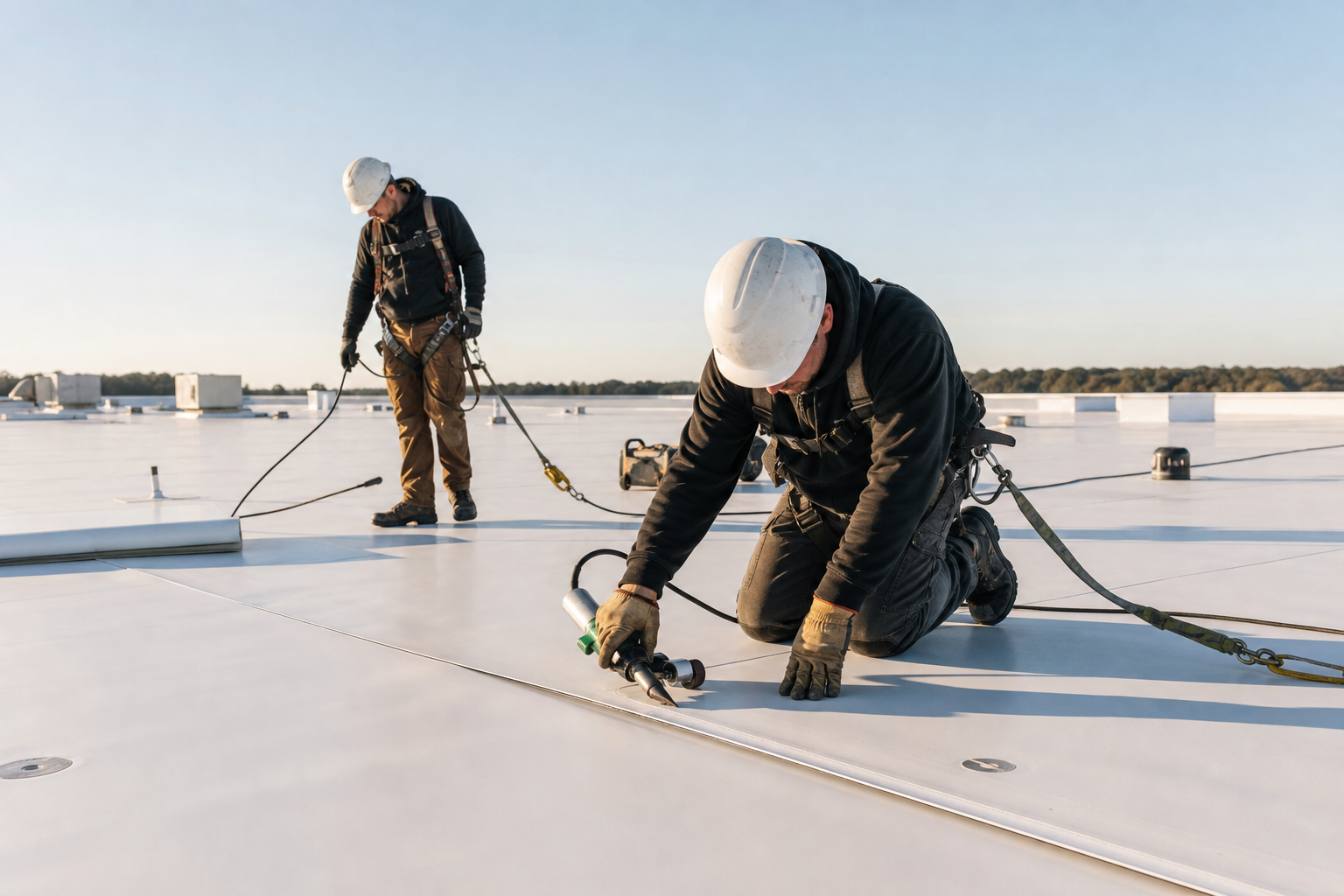
Commercial roofing crew working on a white single-ply membrane system
Reinforced asphaltic membrane

Modified bitumen work begins with laps, flashings and surface condition.

HighHold evaluates the membrane, surfacing, details, drainage and repair history before defining the scope.

Single-ply installation and service capability
01Lap condition02Surfacing03Flashings04Ponding areas
COMMERCIAL SCOPE

What this commercial decision should account for.

Modified bitumen assemblies may use different plies, attachment methods and surfacing. Open laps, splits, blisters, worn surfaces and transition details require system-aware review.

The useful starting point is not a generic price request. It is a clear picture of the existing condition, the property use, the affected area, and the result the facility team needs. HighHold organizes the next step around the condition of the property, the operating need, and a clearly defined commercial scope.

01

Lap condition

Review lap condition in the context of condition, access, timing, and the rest of the commercial property.
02

Surfacing

Review surfacing in the context of condition, access, timing, and the rest of the commercial property.

03

Flashings

Review flashings in the context of condition, access, timing, and the rest of the commercial property.

04

Ponding areas

Review ponding areas in the context of condition, access, timing, and the rest of the commercial property.

EVALUATION

Turn visible symptoms into a defensible scope.

Accessible laps, wall flashings, penetrations, drains, scuppers, perimeter conditions, previous patches and moisture indicators help distinguish isolated service from broader deterioration.

Photos and a short description help begin the conversation, but field conditions and concealed construction can change the final recommendation. HighHold separates observed facts, reasonable next investigations, and the work that can be responsibly proposed.

OPERATING REALITY

Plan the work around the property—not only the material.

Heat, odor, access and occupied-property protection may influence repair and replacement methods. The confirmed scope should match the existing assembly and site constraints.

A useful proposal should make the sequence understandable: what is included, what needs access, what could affect occupants or traffic, how weather exposure is managed, and what closeout information the property team should retain.

THE HIGHHOLD STANDARD

Condition. Scope. Operations. Documentation.

Every recommendation should connect visible condition to the property decision, work sequence and operating reality.

01

Document the condition

Organize the visible commercial roofing conditions, affected areas, and decision drivers.

02

Define the scope

Separate immediate needs, maintainable conditions, phased priorities, and capital work.

03

Protect operations

Account for access, occupants, equipment, traffic, weather, and scheduling before mobilization.

COMMERCIAL QUESTIONS

Questions before the scope is defined.

What information helps HighHold evaluate modified bitumen work begins with laps, flashings and surface condition?+

Share the property location, current condition, approximate area, access constraints, operating schedule, photos, and the decision or problem driving the request. That context helps HighHold frame a responsible first conversation.

Does every commercial roofing request require a full replacement?+

No. HighHold starts with condition and operating need. A focused repair, planned maintenance, restoration, phased work, or replacement may be appropriate depending on what the assessment documents.

How does HighHold plan work around an active commercial property?+

The initial scope considers access, occupants, tenants, inventory, equipment, traffic, weather exposure, and scheduling. Those operating constraints belong in the plan before crews mobilize.

COMMERCIAL ROOFING

Get the property condition out of the unknown.

Share the location, affected system, visible condition and operating need to organize the next step.

01

Active roof leak?
Use the emergency roofing path so the urgent request is clearly identified.

COMMERCIAL REQUEST PLANNER

What does the property need?

Organize the essentials, then call 817-675-6543.

This planner does not transmit data. It prepares a summary you can copy or place into an email draft after review.